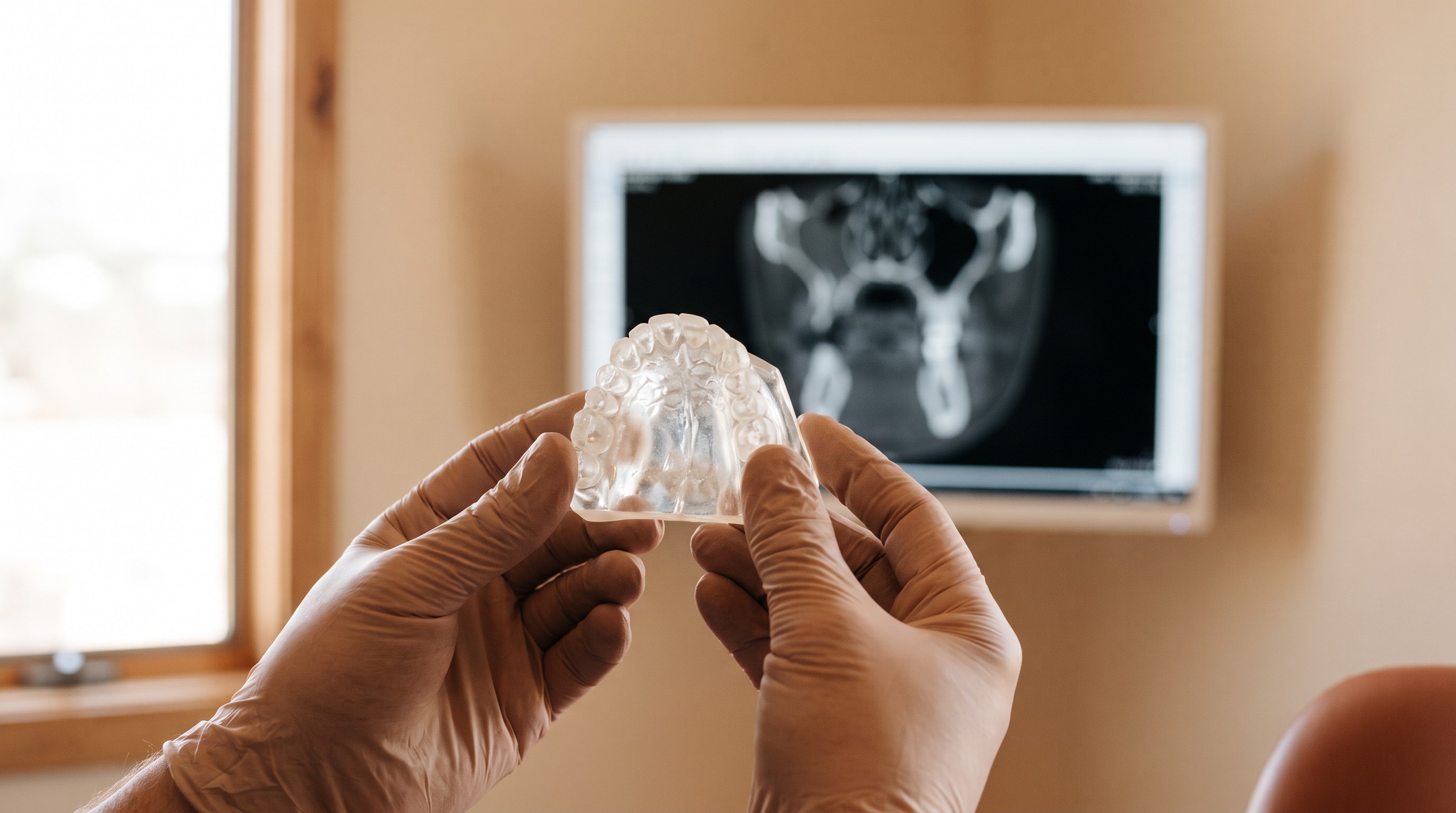
A sinus lift adds bone between your upper jaw and the maxillary sinus so an implant has enough anchorage. It's often needed when upper back teeth have been missing for years and the sinus floor has dropped. A 3D CBCT scan at PARCS Dentistry confirms whether you need one before implant placement.
If you've been wearing a partial or full upper denture for a while, you've probably heard the words "you might need more bone up top." That doesn't mean anything is wrong with you. It means the anatomy of the upper jaw changes after teeth are lost, and we plan around it. At PARCS Dentistry on the east Flamingo corridor, we walk patients through this decision every week.
What is a sinus lift and why might I need one?
A sinus lift, also called sinus augmentation or a maxillary sinus graft, is a procedure that adds bone graft material between the floor of your maxillary sinus and your upper jawbone. The maxillary sinuses are two air-filled spaces that sit directly above your upper back teeth. When those teeth are missing, the sinus tends to drop.
Here's why it happens. Once an upper molar is extracted, the bone that once held its roots begins to resorb. At the same time, the sinus above expands downward into the empty space, a process called pneumatization. According to peer-reviewed oral surgery literature, this pneumatization is one of the biggest reasons upper back implants require augmentation more often than lower ones.
The goal is simple. We need enough vertical bone height to fully house a dental implant. Not almost enough. Enough.
How does the dentist know if I need one?
Guesswork has no place here. Before any implant plan is finalized, we take a CBCT scan, a 3D image that measures bone height and width in millimeters. The American Association of Oral and Maxillofacial Surgeons considers CBCT the standard for pre-surgical implant planning, and it's the same imaging we use in our office.
The positions most likely to need a lift are the upper premolars and molars, roughly the second bicuspid back to the second molar. Front teeth almost never need one because the sinus doesn't extend that far forward. Some patients walk in assuming they'll need a lift and their scan shows plenty of bone. Others are surprised to learn they do. That's the whole point of imaging first.
A retired hospitality worker from Sunrise Manor came in last spring convinced he'd need major surgery. His CBCT showed 11 millimeters of bone under one sinus and 4 under the other. One side got an implant the same visit. The other needed a lift. Same patient, different plans, both based on measurements, not assumptions.
What happens during the procedure?
There are two main approaches, and the one we choose depends on how much existing bone you have.
Crestal (osteotome) lift: Done through the top of the ridge where the implant will go. Less invasive, used when you're only a few millimeters short. Sometimes the implant can go in the same day.
Lateral window lift: A small access window is made on the side of the upper jaw. The sinus membrane is gently lifted and graft material is packed underneath. This is the traditional approach when significant height is needed.
Sedation dentistry is available in-office for patients who feel anxious about any of this. That matters a lot in our practice, because many of our implant patients have avoided dental work for years specifically because of fear. You can be lightly sedated or deeply relaxed, whichever fits your health history.
Most patients report pressure, not sharp pain, during the procedure itself. The appointment usually runs one to two hours depending on the approach.
How long is recovery and when can implants be placed?
Soft-tissue healing takes about a week to ten days. Swelling peaks around day two or three and settles quickly after that. The bigger timeline is the graft itself.
Graft material needs several months to mature into your own bone before it can safely anchor an implant. Depending on the case, we may:
Place the implant at the same time as the lift (simultaneous approach) when there's enough starting bone to stabilize it
Wait four to nine months after the lift before placing the implant (staged approach) when starting bone is thin
Post-op instructions matter a lot for the first two weeks. No blowing your nose. No drinking through straws. Sneeze with your mouth open. Skip air travel if we ask you to. These sound like small rules. They're not. Pressure changes inside the sinus can disrupt the graft before it stabilizes.
What are the risks and success rates?
Sinus augmentation is one of the more predictable augmentation procedures in dentistry. Cochrane reviews on bone augmentation for dental implants report consistently high success rates when done by an experienced surgical team.
Complications do exist and we discuss all of them before scheduling:
Sinus membrane perforation: The most common intraoperative issue. Small perforations are usually patched during surgery without changing outcomes.
Post-op sinusitis: Uncommon but possible. Managed with medication.
Graft failure: Rare, more likely in smokers and patients with uncontrolled diabetes.
The American Dental Association and multiple implant journals link smoking to higher rates of both implant and graft complications. If you smoke, we'll have an honest conversation about timing and cessation before surgery. It's not judgment. It's math.
Choosing the right team matters. Dr. Eun Bee Kim completed AAID Maxicourse training in implant dentistry, and both doctors at PARCS work regularly with patients from Paradise, Whitney, Henderson, and the neighborhoods near Sunrise Hospital & Medical Center who need full-arch or upper-back implant work.
Frequently Asked Questions
Is a sinus lift painful?
Most patients describe pressure and mild soreness rather than sharp pain. We use local anesthesia and offer sedation options in-office so you're comfortable throughout. Over-the-counter pain medication is usually enough for the first few days after surgery.
Can I get a sinus lift and implant at the same appointment?
Sometimes, yes. If your CBCT shows enough starting bone to stabilize the implant, we can place both in one visit using a crestal approach. If bone is very thin, we stage the procedures and place the implant months later once the graft has matured.
How much longer does treatment take if I need a sinus lift?
A staged sinus lift typically adds four to nine months to your overall implant timeline, because the graft needs to fully integrate before the implant goes in. A simultaneous lift adds no extra time beyond normal implant healing.
Will my insurance cover a sinus lift?
Coverage varies. Some plans consider sinus lifts a covered surgical procedure, others classify them as elective. We verify benefits before scheduling and offer financing and an in-house membership plan to help make full-arch cases affordable.
Are there alternatives to a sinus lift for upper implants?
In some cases, yes. Zygomatic implants (anchored in the cheekbone), tilted implants used in All-on-4 protocols, and shorter implants can sometimes avoid the sinus entirely. Your CBCT determines which options are realistic. That's why the scan comes first, always.
If you're weighing upper implants and wondering whether you need a sinus lift, call PARCS Dentistry at (725) 250-2840 to schedule a consultation and 3D scan. We'll show you the images, explain what we see, and give you a written plan before anything moves forward. Hablamos español. 한국어로도 상담 가능합니다.


